How to grow kitchen herbs on a small apartment windowsill
· Editorial team newsfromboston7.com
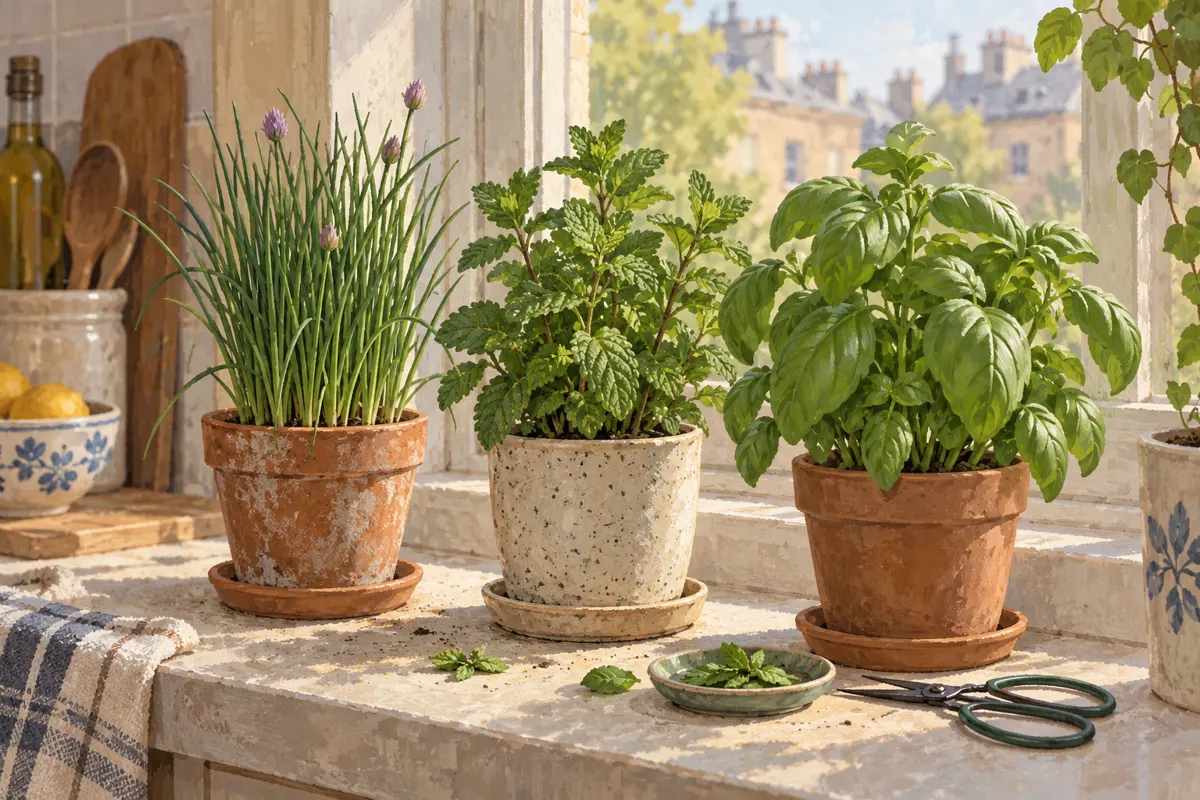
To grow kitchen herbs on a small windowsill, choose a bright spot, start with a few herbs you regularly cook with, and use separate pots with drainage holes. Check the soil before watering and harvest lightly as plants grow. A narrow sill can be useful without holding a large collection: light, room for roots, and easy access matter more than squeezing in extra pots.
Check the light before choosing herbs
Watch your windowsill through a typical day. Notice when direct sunlight reaches it and whether nearby buildings, blinds, or curtains block the light. A window that looks bright to you may offer only a short period of direct sun. Many culinary herbs need around six hours of sunlight, and a south- or west-facing window can be a useful starting point.
Match your choices to the light available. Chives and mint are options for a less sunny window; basil may need a grow light, particularly during darker months. Keep foliage from touching cold glass, and avoid drafts or a radiator directly beneath the plants. If the space behind closed curtains becomes cold overnight, move the pots into the room.
Choose a few herbs you will actually use
Our editorial proposal is to begin with two herbs rather than fill every available inch. Pick them by looking at meals you already make. This gives each plant room and makes the daily care easier to manage.
- Chives: useful for eggs, soups, salads, and baked potatoes; they suit small containers and moderate light.
- Mint: useful for tea, salads, and desserts; give it its own pot and trim it regularly.
- Basil: useful for pesto and pasta sauces; choose it when you have a sunny position or can provide supplemental light.
Small starter plants simplify the first setup because you can skip germination. Seeds are another option if you want to grow plants from the beginning. Follow the packet’s directions for sowing depth and spacing instead of treating every herb the same.
Arrange pots that fit and drain
Measure the usable depth of the sill before choosing containers. Our proposed layout is a short row of individual pots, each fully supported by the sill and sitting in a saucer. Leave enough room to lift and turn each pot without knocking its neighbors. Separate containers also let you check and water each plant individually.
- Choose pots with drainage holes and enough space for the plants’ roots. Avoid selecting a tiny pot solely because it fits.
- Add a potting mix intended for containers. Good drainage helps prevent roots from sitting in soggy soil.
- Plant your starter herbs, or sow seeds according to the packet instructions.
- Place a saucer beneath each pot to catch drainage, keeping leaves clear of the window.
Build a soil-checking routine
Use a regular reminder to check your herbs, rather than a fixed schedule to water them. Feel the soil with a finger: if it is still moist, wait; when the upper soil feels dry, water gently around the base. Check every pot separately, since one may be ready before another.
Water until excess begins draining into the saucer. After about 15 minutes, empty any water left there. Rotate the pots every few days to help growth stay even instead of leaning toward the window. Yellowing leaves can accompany poor drainage, so check for standing water rather than automatically adding more.
Harvest lightly and adjust as you go
Use sharp scissors for small harvests, leaving most of the plant intact. For branching herbs such as basil and mint, snip just above a point where leaves join the stem to encourage branching. Avoid removing more than one-third of a plant at once; a small windowsill garden is best approached as a source of modest, regular additions to meals.
Our proposal is to keep the initial setup small until its care feels routine. If a plant repeatedly leans toward the glass, review its light and rotation. If you rarely use an herb, choose a more useful replacement next time. Expand only when the sill has room and the light can support another plant.