How to make a family recipe scrapbook with children
· Editorial team newsfromboston7.com
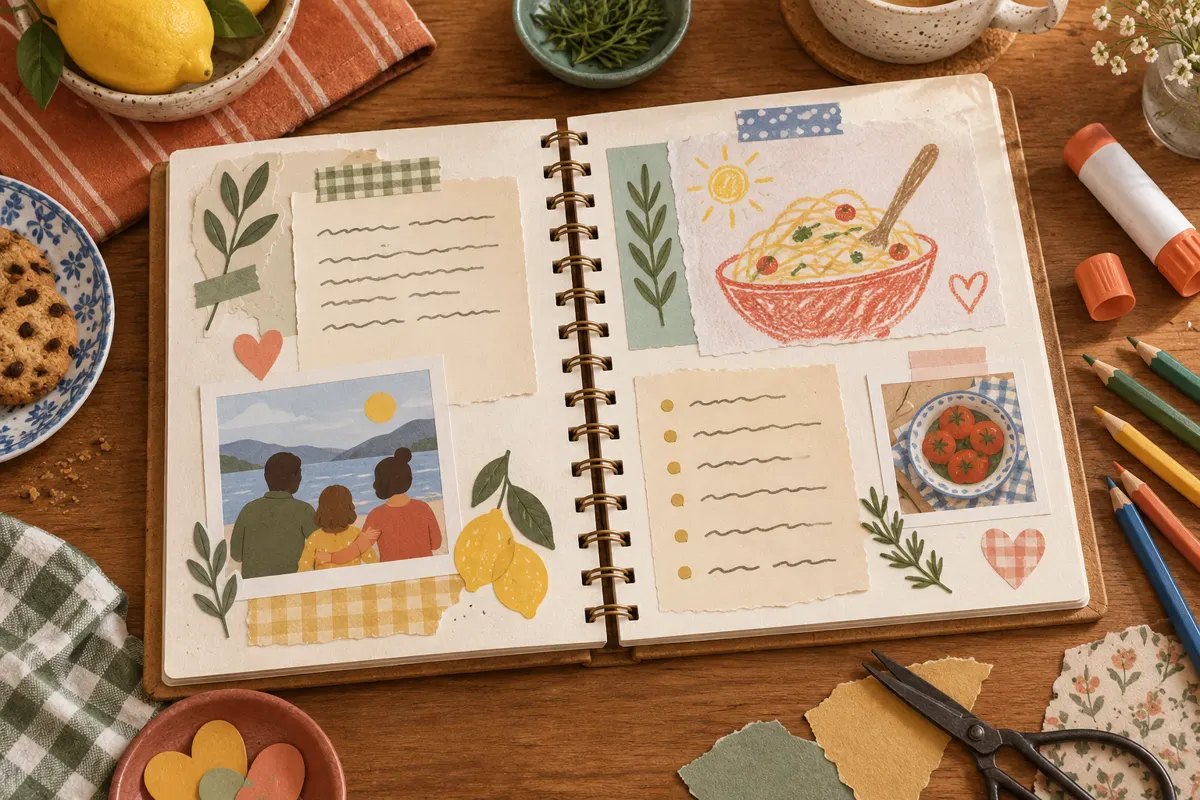
Make a family recipe scrapbook by collecting favorite recipes and the stories behind them, then building pages with readable cooking instructions, family photos, and children’s drawings. Start with a small collection so children can help finish it. The project plan below is an editorial proposal you can adapt to your children’s interests, abilities, and attention spans.
Choose a small collection and gather supplies
Choose five to ten recipes to begin with. Ask children which meals remind them of a particular person or occasion: a birthday breakfast, a familiar soup, or something they enjoy making together. Family cookbooks can bring recipes, photographs, and memories into one place; you can add more entries as your collection grows.
For this proposed project, use a binder with removable pages or a blank scrapbook. A binder makes it easy to rearrange recipes and insert later contributions. Gather paper, pencils, washable markers, glue sticks, photo copies, and scissors appropriate to the children using them. Keep irreplaceable recipe cards and original photographs aside; work with copies when cutting or gluing.
Ask relatives for recipes and specific memories
Invite each relative to contribute one recipe and a short memory. Contributions might arrive as handwritten cards, emails, or spoken instructions. Include the contributor’s name and explain why the dish matters to your family. Photographs of gatherings or the person associated with a recipe can help connect the food to its story.
- When do you usually make this dish?
- Who taught you how to make it?
- What do you remember about eating it together?
- Is there a step someone learning the recipe might find confusing?
If a relative cooks from memory, have an adult write down the quantities and sequence while the cook explains. Ask about unclear details, such as pan size or what “a little” means. Leave uncertain information marked for follow-up instead of guessing. With permission, a voice recording can let children concentrate on listening rather than taking notes.
Give each child a manageable job
The following task suggestions are proposals, not fixed age rules. Choose jobs by what each child can comfortably do, and let them switch roles. One child may enjoy interviewing relatives while another prefers drawing. An adult can handle transcription and checking so children’s contributions remain enjoyable.
- Younger children: draw the finished dish, choose a photo, decorate a border, or dictate a sentence about their favorite part.
- Children comfortable with writing: copy a title, label a drawing, write a caption, or help put pages in order.
- Older children: type recipes, conduct an interview, photograph a dish, or check that ingredient quantities were copied correctly.
- Adults: confirm unclear instructions, supervise cutting as needed, and review the recipe before it becomes a finished page.
Work on one page at a time. If attention fades, stop after a complete task, such as choosing the photograph, and leave the next step for another session.
Build pages that are easy to read and personal
Use a consistent layout, with space for ingredients, instructions, and a personal story. Keep photographs and decorations clear of the cooking directions. Family photos, quotes, and memories can make the collection feel distinctive without making each page complicated.
- Write the dish’s name and identify the relative who contributed it.
- Add the ingredients with quantities, followed by numbered cooking instructions.
- Include the yield, temperature, and timing if the contributor supplied them.
- Add a short memory, a photograph, or a child’s drawing.
- Arrange everything before gluing, then check that the recipe remains readable.
Check the recipes and leave room to grow
Before assembling the book, ask each contributor to review their recipe. Check that every ingredient appears in the instructions and that no step refers to a missing ingredient. Keep a family variation clearly labeled, such as “Our version uses raisins,” so readers understand whose version they are following.
For the final assembly, the proposed approach is to let children choose a simple order, such as breakfasts, main meals, and treats. Number the pages and add a contents page if finding recipes becomes difficult. Photograph or scan completed pages as a backup, and leave a few empty pages for the next family favorite.