How to organize a casual backyard ring toss game
· Editorial team newsfromboston7.com
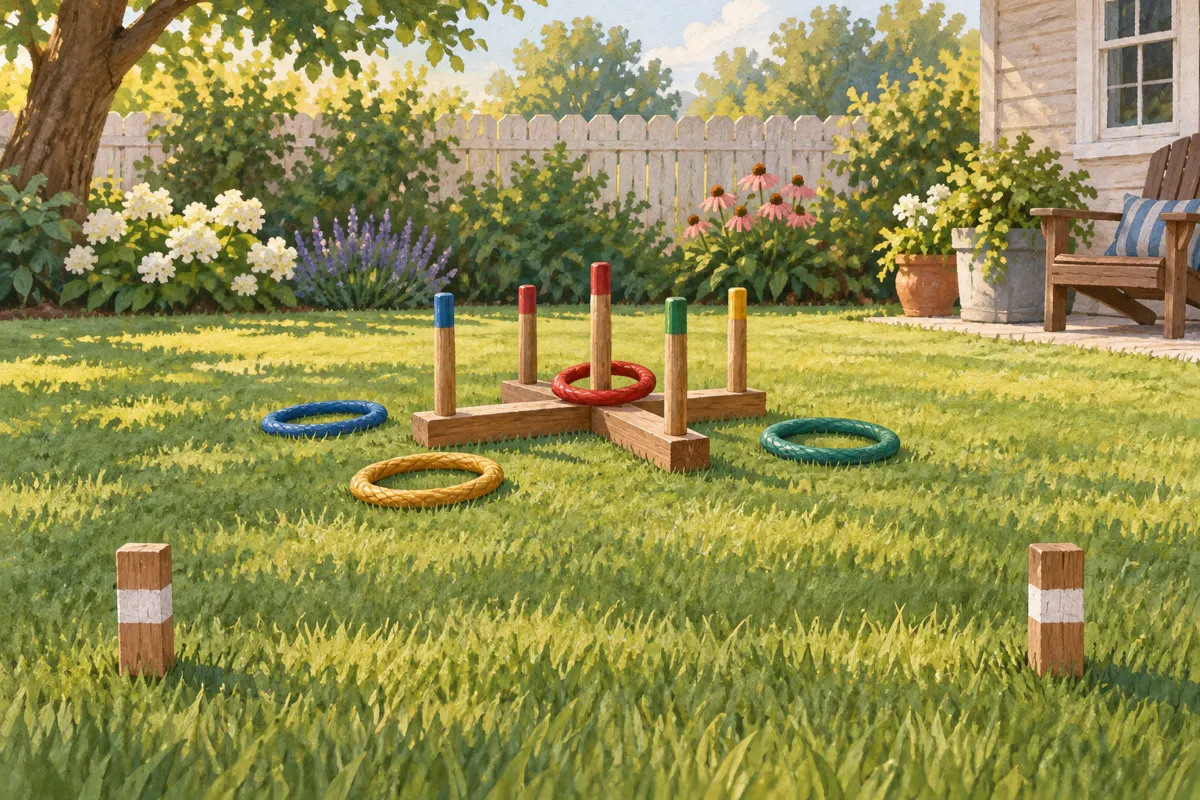
Set a ring toss target on level ground, mark a throwing line, and have players take turns tossing the same number of rings. For a casual backyard game, our proposed format is three rings per turn, one point for each ring that lands fully around a peg, and five rounds with equal turns for everyone. Adjust the throwing distance before play so each player has a manageable challenge.
Choose your target and clear a playing area
For this setup, use loose rings tossed toward a board with upright pegs. A ring on a string that swings toward a wall-mounted hook is a different version, with its own mounting and string adjustments. Check which type you have before setting up; the ground-level game described here needs no overhead attachment.
- A stable ring toss board with pegs.
- Rings that fit over the pegs, ideally matching in size and material.
- A visible throwing-line marker, such as a flat strip or chalk on a patio.
- Paper and a pencil for recording scores.
Our setup proposal is to choose a level patch of lawn or patio away from foot traffic, food tables, and breakable objects. Check that the board does not rock and that rings can settle around the pegs. Keep waiting players beside or behind the thrower, with the space between the line and target clear.
Set throwing distances that suit your group
Players throw from a designated line, but the supplied loose-ring rules do not specify a universal distance. Ring size, peg spacing, and player ability all affect the challenge. Use a few practice throws to choose a distance instead of borrowing the mounting measurements for a hook-and-ring game.
- Place the first marker a few comfortable paces from the target and let everyone try three practice throws.
- Move it closer if beginners repeatedly fall short or cannot reach the target with a gentle toss.
- Add a farther line for players who want more difficulty.
- Agree which line each person will use before scoring starts, and keep those assignments for the game.
Offer the nearer line according to comfort and ability, rather than age alone. For a casual mixed-skill game, everyone can earn the same points from their agreed line. If someone wants to change distance halfway through, treat the current game as practice and begin a fresh scored game.
Explain turn order and scoring before starting
A successful ringer lands fully around a peg. A ring that only touches a peg or leans against it does not count. State that rule before the first turn so players know what they are aiming for.
- Choose a player order and write the names on the score sheet.
- Give the first player three rings to throw one at a time from behind their assigned line.
- Award one point for each ring resting fully around a peg after all three throws. Count each ring once.
- Record the score, then collect the rings before the next player begins.
- Complete five rounds, giving every player one turn per round. The highest total wins.
Under these proposed rules, misses and throws made from across the line score zero, with no replacement throw. If the board has printed point values, agree whether to use them or the simpler one-point system. For a tie, give each tied player another three-ring turn; repeat only if the scores remain equal.
Use a gentle, repeatable toss
Face the target, hold the ring lightly, and use an underhand swing to send it in a controlled arc. Keep your stance and release similar from throw to throw. Too much force can make the ring overshoot or bounce, so start gently and adjust after seeing where it lands.
During practice, choose one peg and aim at it for all three throws. This gives you a clearer sense of whether to change your release or force. Take a moment between throws, and keep any forward step behind the throwing line.
Keep the game moving as guests join
Our hosting proposal is to have one person call the next player and record scores. Wait until every ring has landed before anyone approaches the target. Let newcomers practice beside the next scheduled break, then join a fresh game so everyone receives equal turns.
For teams, our proposed format is to pair players, keep the same individual turns, and add partners’ scores together. Use equally sized teams. If guests prefer a shorter game, agree on fewer rounds before starting; finish the final round for everyone before declaring a winner.