How to pack a picnic for a day trip without crushing the food
· Editorial team newsfromboston7.com
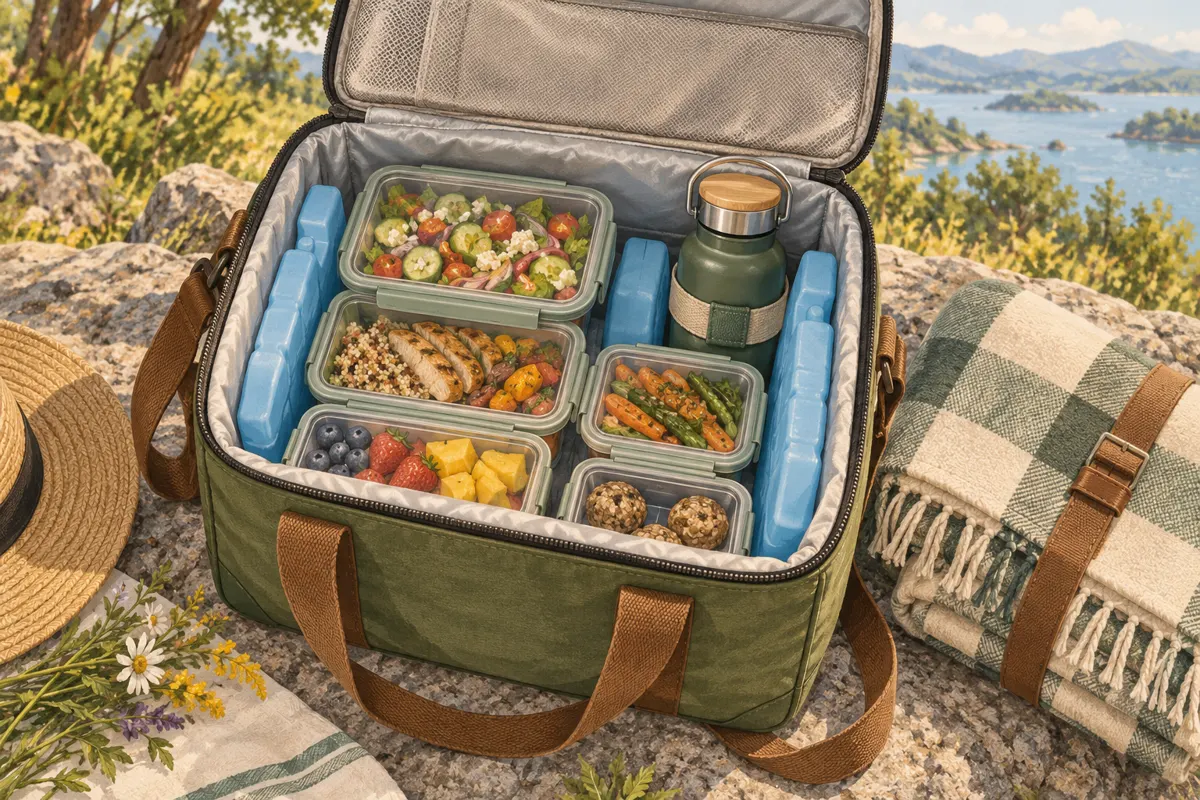
Protect picnic food with rigid containers, keep wet ingredients separate, and pack heavy items below delicate ones. For a day trip on public transit, use an insulated bag for chilled food and keep dry snacks and essentials within easy reach. Arrange everything so you can retrieve a drink or snack without unpacking lunch.
Choose food that can handle the journey
Start with a menu that fits the trip. Wraps, apples, grapes, and carrot sticks are practical choices because they are easier to contain than loosely stacked sandwiches or delicate fruit. Wash produce at home and dry it before packing. Carry only the portions you expect to eat, so containers do not compete for space.
A proposed simple lunch is a wrap in its own box, carrot sticks, an apple, and crackers in a separate container. If you prefer sandwiches, choose fillings that stay inside the bread and give each sandwich enough room to retain its shape. Avoid building lunch so tall that closing the lid compresses it.
Separate wet ingredients from crisp food
Crushing is only part of the problem: food can arrive intact but soggy. As a packing proposal, carry dressing, dips, and juicy sandwich additions in separate sealed containers. Add them when you eat. Keep crackers away from washed produce and anything that might release liquid.
- Salad: pack the vegetables in a box and dressing in a small sealed pot.
- Sandwich: carry juicy tomato slices separately and add them at lunch.
- Crackers and dip: give each its own container rather than sharing one compartment.
- Fruit: use a separate box for softer pieces so they do not sit beneath the main meal.
Check that lids close securely before loading the bag. Small portions in sealed containers also make it easier to take out one snack without exposing or disturbing the rest of the food.
Give delicate food a protective container
For protection from pressure, the proposed approach is to use rigid boxes for sandwiches, wraps, soft fruit, and crackers. A wrapper contains a sandwich, but it provides little structure against a bottle pressing into it. Choose a box that holds the food comfortably without requiring you to force down the lid.
Keep delicate foods in a single layer where practical. If a container has generous empty space, choose a smaller one so the contents have less room to slide during a bus ride or walk. Stack boxes only when the lower lid can support the upper container without bowing inward.
Load the insulated bag in a useful order
Chill food before departure, pre-cool the insulated bag, and use frozen ice packs around food that needs refrigeration. Dairy items, deli meats, and dips need attention to cooling as well as protection from pressure. An insulated bag helps retain cold; it does not provide an unlimited safe storage time.
- Place a flat frozen ice pack at the bottom, with additional packs alongside chilled containers where space allows.
- Set the heaviest sturdy containers low in the bag, keeping their bases level.
- Place lighter boxes above them, with delicate food protected inside rigid containers.
- Secure bottles beside the boxes so they cannot roll onto lunch; use a separate bottle pocket if available.
- Put the first snack near the opening and close the bag fully.
Keep dry snacks outside the chilled compartment when practical, reducing how often you open it. At the picnic spot, place the insulated bag in shade and keep it closed between servings.
Pack for the ride and the first few minutes
Before leaving, try the fully packed bag on your shoulder or back. As a practical check, walk a few steps and confirm that containers stay level and nothing shifts heavily. On transit, keep the bag upright and avoid placing other luggage on it. Reposition a loose bottle before it has a chance to press against food.
- A blanket or cloth at the top, ready to spread out first.
- Napkins and utensils in an outer pocket or separate pouch.
- A serving utensil if your meal includes salad or shared dips.
- A bag for trash and another for used containers or utensils.